
Optical PC Film
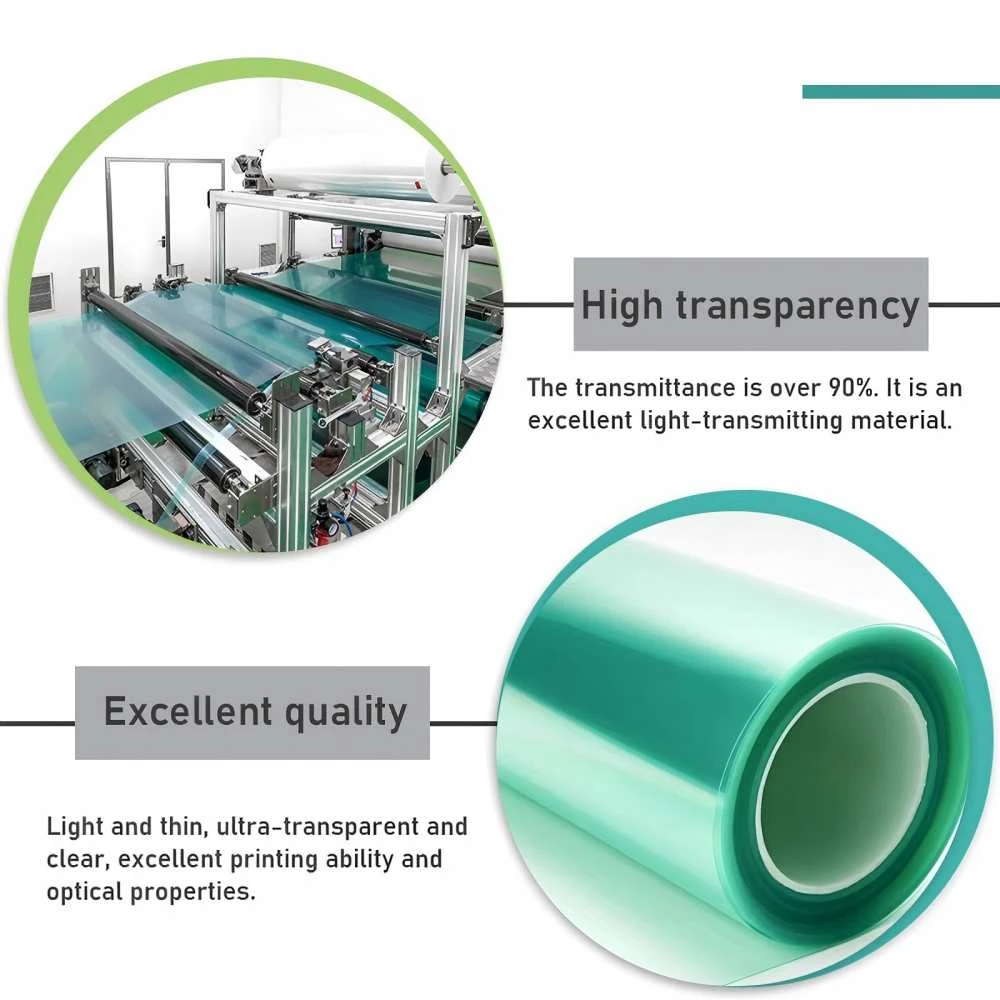
Optical PC Film, also known as optical polycarbonate film, offers high light transmittance, low haze, surface clarity, and stable processability for display, automotive, electronic, and precision component applications.
Optical PC Film Product Range
Kaixin provides multiple PC film options for optical, electronic, automotive, security, decorative, and flame-retardant applications. Select a product type below to view detailed specifications and application information.
Glossy Polycarbonate Film
High-transparency PC film with a smooth glossy surface for display windows, optical components, protective lenses, and precision applications.
View Glossy Polycarbonate FilmTextured Polycarbonate Film
Matte or textured PC film for anti-glare surfaces, display panels, lighting fixtures, membrane switches, and functional surface applications.
View Textured Polycarbonate FilmPolycarbonate Color Film
Colored PC film for decorative surfaces, labels, electronic panels, visual design layers, and customized color applications.
View Polycarbonate Color FilmFlame Retardant Film
Flame-retardant PC film for internal structural parts, electrical insulation, electronic equipment, and enclosure-related applications.
View Flame Retardant FilmID Card Film
Durable PC film for ID cards, driver’s licenses, bank cards, laser engraving, non-delaminating card structures, and security documents.
View ID Card FilmOptical Polycarbonate Film
Polycarbonate (PC) Film is an amorphous thermoplastic engineering plastic renowned for its exceptional physical, chemical, and optical properties. Our polycarbonate film products are wildly used in automotive components, membrane switches, lighting applications, functional products (such as anti-fog/anti-glare solutions), LED/LCD displays, electronic circuit boards, ID cards, etc.
Kaixin’s distinctive portfolio of high-performance plastic film products helps meet our customers’ evolving application specifications. All our film products are certified to comply with RoHS and REACH regulations, ensuring environmental compliance.
Key Optical Advantages of Kaixin Optical PC Film
Ultra-High Light Transmittance
Achieves light transmittance of 91.2%-93.5% (ASTM D1003), approaching optical glass levels, while maintaining haze <1%. This meets stringent uniformity requirements for Mini/Micro LED backlight modules. By controlling molecular weight distribution (PDI <1.2), light-scattering interfaces are eliminated, resulting in visible light transmission variation <0.5% across the 380-780nm spectrum.
Low Birefringence Property
Achieve ultra-low birefringence (<0.001 @550 nm) through advanced asymmetric molecular chain alignment technology, effectively minimizing image distortion. Ideal for precision optics applications including VR/AR lenses and HUD displays.
UV Resistance & Weatherability
Incorporating nano-scale UV absorber coating technology, the film is validated by 3,000 hours of QUV accelerated aging tests.
Yellowing index ΔYI <1.5
Light transmittance loss <2%
Performance far exceeds ASTM G154 requirements, delivering long-term anti-aging protection for outdoor displays and automotive exterior components.
Comparison of the advantages of optical-grade PC materials
| Performance | PC | PMMA | PET |
|---|---|---|---|
| Long-term temperature resistance | -60°C to 130°C | -20°C to 80°C | -40°C to 120°C |
| Impact resistance strength | 850 J/m (ASTM D256) | 80 J/m | 150 J/m |
| Transmittance | 91.2% – 93.5% | 92% – 94% | 88% – 90% |
| Chemical corrosion resistance | Resistant to oil, alcohol, weak acids, and weak bases | Prone to solvent erosion | Resistant to weak acids but not strong alkalis |
| Cost-benefit ratio | High, with a long service life | Medium | Low, requiring frequent replacement |
Types and Applications of PC Films
Optical-Grade PC Film:
Features high transparency and low birefringence, making it suitable for applications demanding superior optical performance, such as optical lenses, display screens, and light guide plates.
Electronic-Grade PC Film:
Delivers outstanding optical, electrical, and mechanical properties alongside high-efficiency moldability. Widely applied in key fields like display modules, printed electronics, and insulating dielectrics.
Textured PC Film:
Surface undergoes matte treatment to prevent glare, ideal for displays, lighting fixtures, and other settings requiring anti-reflective properties.
Color PC Film:
Incorporates color masterbatches to achieve various colors, catering to decorative, labeling, and other scenarios where color customization is needed.
ID Card PC Film:
Boasts high durability and security. As a laser-engravable and non-delaminating material, it is suited for high-security document carriers such as ID cards, driver’s licenses, and bank cards.
Flame-Retardant PC Film:
Enhanced with flame retardants to improve fire resistance, primarily used for internal structural components and enclosures in electronic and electrical equipment.
Recycled PCR (Post-Consurer Recycled) Polycarbonate Material:
Produced from regenerated post-consumer polycarbonate waste—including electronics/appliance housings, automotive lamp covers, and packaging materials—this material reduces environmental footprint through resource cycling. Reusable in electronics, automotive components, and packaging applications, it serves as a core sustainable material enabling circular economies.
PC Film Technology Innovation Driven by Industry Pain Points
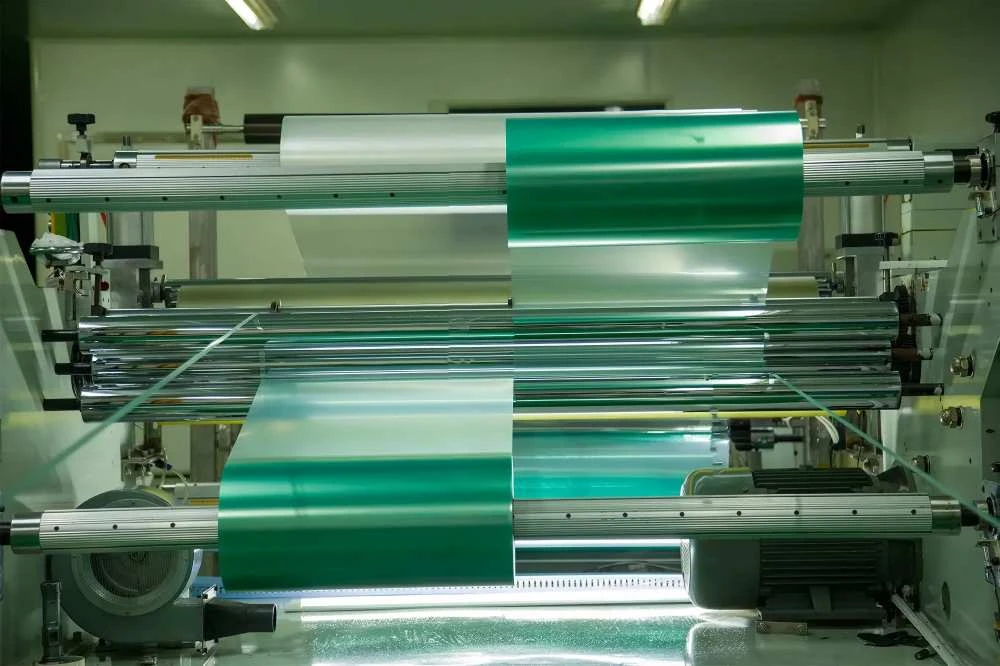
Amid trends toward lightweight new energy vehicles, ultra-thin consumer electronics, and flexible wearable devices, traditional materials face three core challenges:
Impact Resistance vs. Weight Reduction Paradox:
Conventional materials suffer >50% impact resistance loss when thickness is reduced by 30%
Inadequate Extreme Environment Adaptability:
Pronounced issues: brittle failure at -40°C / thermal deformation at 120°C
Limited Functional Integration:
Surging demand for multifunctional composites (anti-glare/anti-fog/anti-microbial)
Kaixin offers a distinctive solution for functional PC films:
We enhance film performance through material upgrades, optimized processing methods, and nano coating technology. The films demonstrate exceptional impact resistance with a puncture strength of 850 J/m (per ASTM D256) while maintaining lightweight thinness. They exhibit broad temperature adaptability, withstanding -40°C without embrittlement and maintaining a heat deflection temperature above 135°C (ISO 75-1). Optical excellence is ensured with ≥91% light transmittance and ≤1% haze (ASTM D1003), making them ideal for integrated substrates.
Typical PC Film Specification Reference
| Performance | Kaixin PC Film Specifications | Standard Value | Testing Standards |
|---|---|---|---|
| Thickness Range | 0.1 – 3.0 mm (±3%) | ±5% | ISO 4593 |
| Transmittance | 91.2% – 93.5% | 88% – 90% | ASTM D1003 |
| Yellowing Index | ΔYI < 1% after 1000h UV aging | / | ISO 4892-2 |
Typical Applications of Optical PC Film
Electronic Display Applications:
In LCD and OLED displays, the optical PC film used for light guide plates have to possess outstanding optical properties (high light transmittance, uniform light distribution, avoiding brightness unevenness and glare) and excellent processability. Additionally, it has to maintain good heat resistance and impact resistance at high temperatures to ensure stability and reliability.
PC film is lightweight and thermoplastic, facilitating the processing of complex patterns through techniques such as laser engraving and thermoforming. Compared to glass light guide plates, PC film is more conducive to production and transportation. Its lightweight characteristics significantly enhance the portability and overall performance of electronic products.
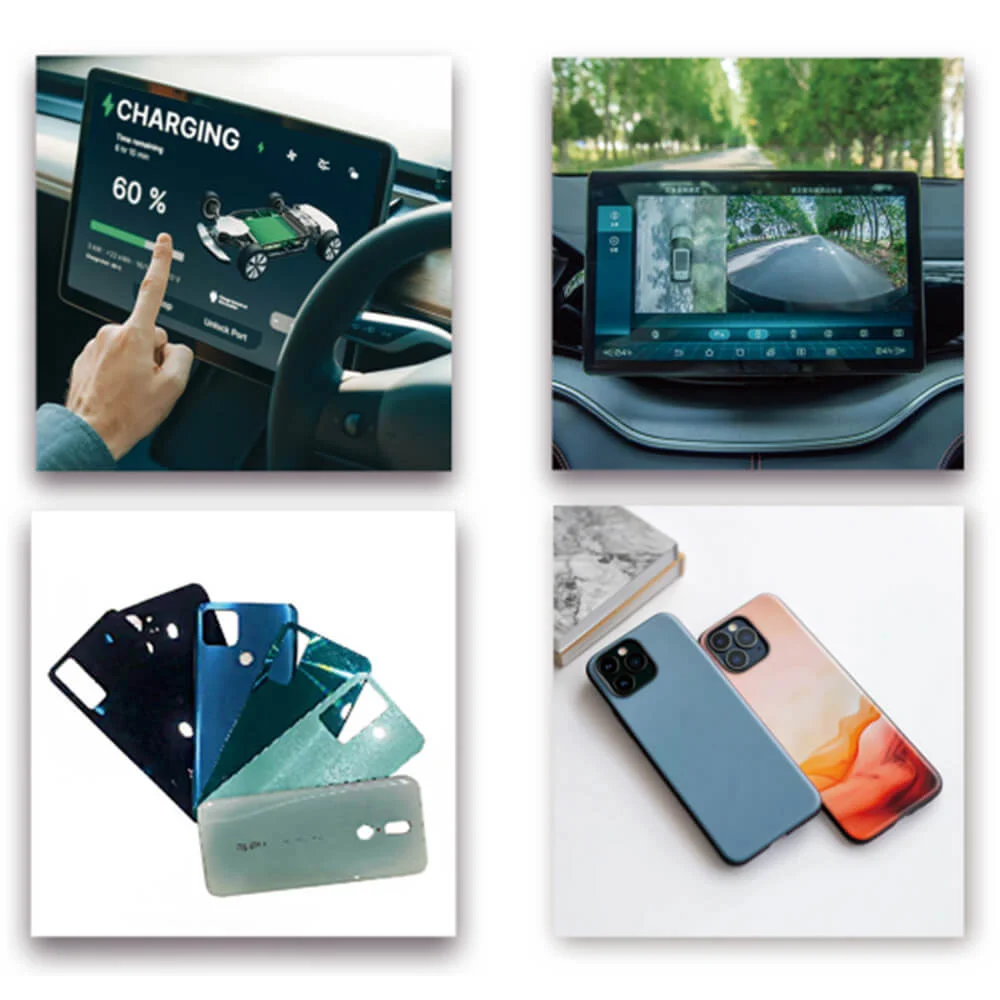
Automotive Industry Applications:
Used in instrument panels, lamp covers, and interior components, PC films provide excellent heat resistance and impact strength.
Two Primary Processing Methods:
Thermoforming
PC films are heated to a specific temperature until softened and pliable, then formed in molds. After cooling, the desired shape is achieved. This method is ideal for large-scale yet relatively simple components like instrument panel covers and automotive interior parts—often requiring extensive bending with moderate shape precision.
Advantages:
Suitable for large-sized and complex-curvature parts; high production efficiency with consistent forming accuracy.
High-Pressure Forming
Preheated PC films are placed into molds and subjected to high pressure (pneumatic or hydraulic) to force material into the mold cavity. This technique produces geometrically complex components such as side windows and windshields, demanding both precise contours and optical clarity.
Advantages:
Enables intricate 3D geometries while maintaining superior dimensional accuracy.
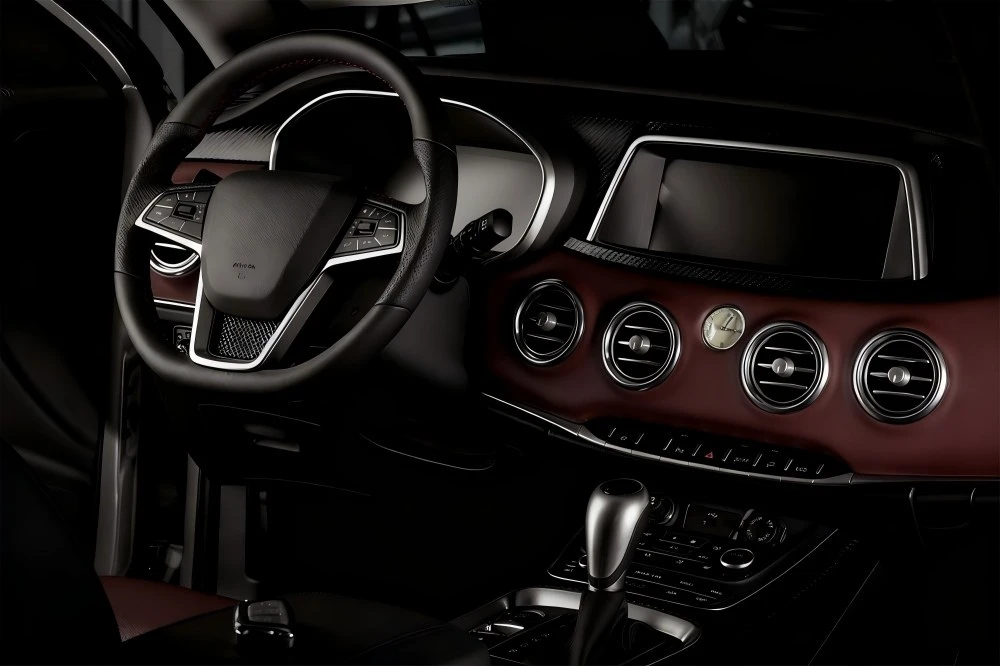
Kaixin continuously enhances the performance parameters and processing technologies of polycarbonate films, ensuring higher efficiency and reliability across premium applications. Whether addressing the pursuit of optical perfection or meeting stringent requirements for complex molding processes, we provide expert technical support and tailored material solutions. Our customization services are dedicated to elevating your product’s market value.
Frequently Asked Questions
What are the main application areas of optical PC film?
Optical PC film is mainly used in display windows, touch panels, backlight modules, and other display-related products that require high light transmittance and visual clarity.
What are the light transmittance and haze performance of optical PC film?
Kaixin optical PC film can achieve light transmittance of 91% or higher with low haze performance, making it suitable for applications that require clear visibility and stable optical quality.
Can optical PC film be supplied with protective film?
Yes. The product can be laminated with protective film on both sides to help prevent scratches during transportation, handling, and processing.
Is optical PC film suitable for printing and lamination?
Yes. The surface of Kaixin optical PC film is designed to be clean and free from visible crystal spots or defects, making it suitable for screen printing, digital printing, and lamination processes.
What thickness range is available for optical PC film?
Kaixin can provide optical PC film in a thickness range from 0.05 mm to 3.0 mm. Specific thickness, width, surface finish, and other specifications can be confirmed according to project requirements.
Does optical PC film support custom colors or special optical properties?
Yes. Custom colors are available. For special optical properties, Kaixin can evaluate the required performance based on the actual application, processing method, and end-use environment. You can request a recommendation for application-specific material selection.
Request an Optical PC Film Recommendation
Need help selecting the right optical PC film? Share your required thickness, application, optical performance, printing or lamination process, and customization needs. Kaixin can recommend a suitable material configuration based on your project.