
Precision Film Slitting and Lamination Services
Kaixin provides precision film slitting and lamination services for optical films, functional films and plastic sheet materials, supporting both Kaixin-manufactured materials and customer-supplied substrates.
Our processing capabilities cover PC, PET, PMMA and other optical or decorative materials in roll and sheet formats. With controlled slitting, hot and cold lamination, clean-room processing and flexible material handling, we support applications in optoelectronic displays, automotive interiors, home appliance panels, printing and IMD/IML processing.
Maximum Feed Width
Maximum Lamination Width
Clean Room Available
Precision Film Processing Capabilities
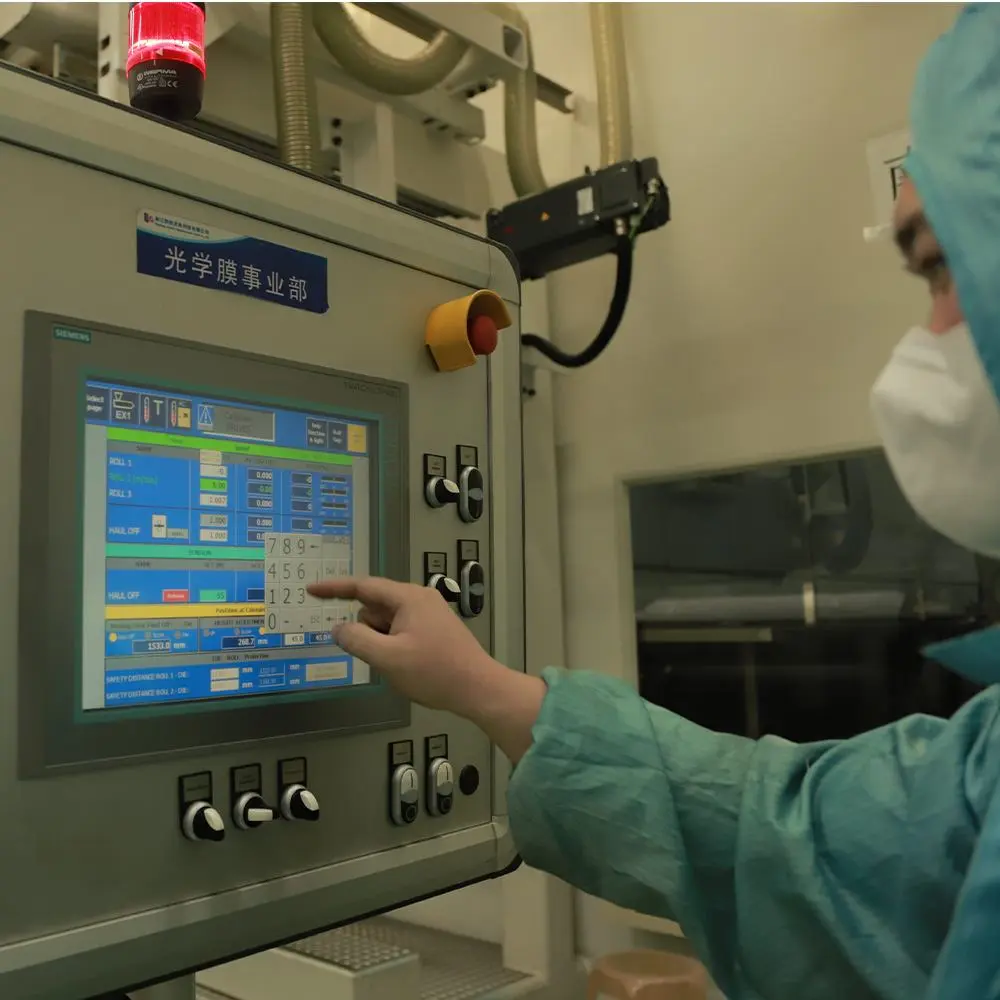
Kaixin combines functional film manufacturing with precision secondary processing to provide integrated slitting and lamination solutions for both roll and sheet materials.
Our processing services cover Kaixin-manufactured materials as well as customer-supplied films and sheets, including PC, PET, PMMA, optical films, decorative films and other functional substrates. Depending on project requirements, we can support precision slitting, hot or cold lamination, clean-room processing, small-batch trials and custom composite development.
Precision Film Slitting Services
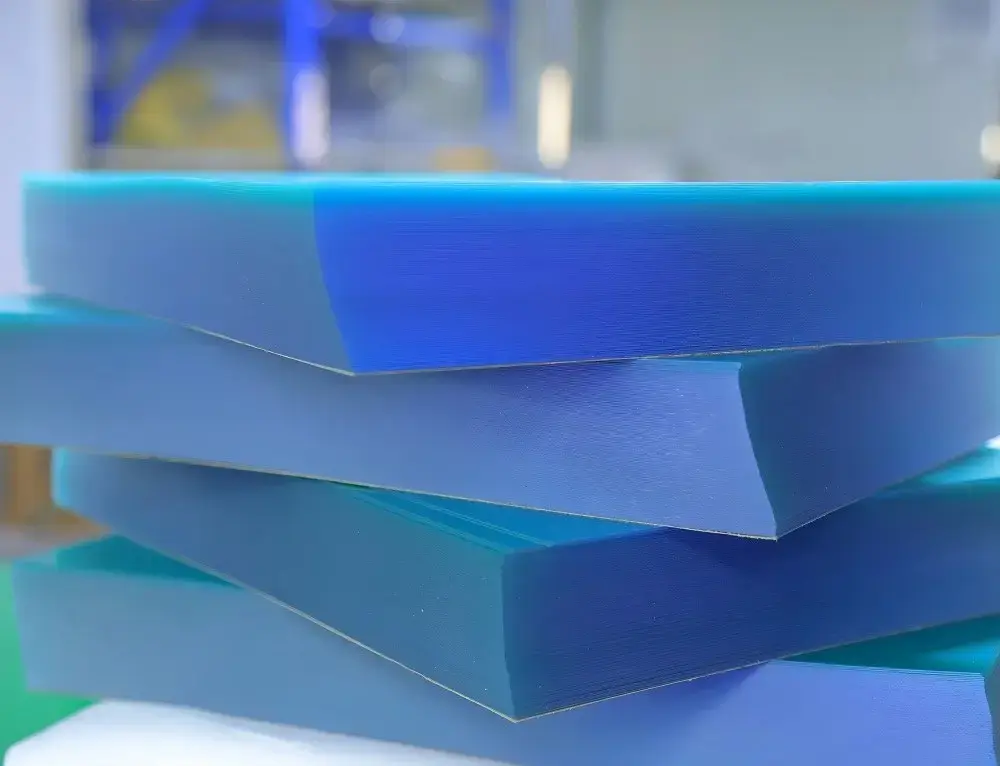
Kaixin provides precision slitting for roll and sheet materials used in optical, decorative and functional film applications. Processing parameters are matched to material type, thickness, rigidity and finished-width requirements to maintain dimensional accuracy, clean edges and stable batch consistency.
The service supports Kaixin-manufactured PC and PET films and sheets, customer-supplied materials, and third-party optical materials. For display-grade and decorative materials with higher cleanliness requirements, Class 10,000 clean-room slitting is also available.
Supported Materials and Formats
Slitting Specifications
| Material Form | Rolls / Flat Sheets |
|---|---|
| Thickness Range | 0.05–2.0 mm |
| Maximum Feed Width | 1600 mm |
| Minimum Slitting Width | 100 mm* |
| Processing Tolerance | ≤ ±1 mm |
| Clean Room Processing | Class 10,000 available |
* Minimum achievable width depends on material thickness, rigidity and processing characteristics.
Slitting Process Control
Kaixin selects round knives, straight knives or air knives according to the material and processing requirement. Blade matching and tension control help reduce common slitting defects such as burrs, material pulling, dimensional drift and edge whitening.
For applications requiring higher surface cleanliness, processing can be carried out in a controlled clean environment to reduce dust contamination and support subsequent lamination, printing or molding processes.
Professional Film Lamination Services
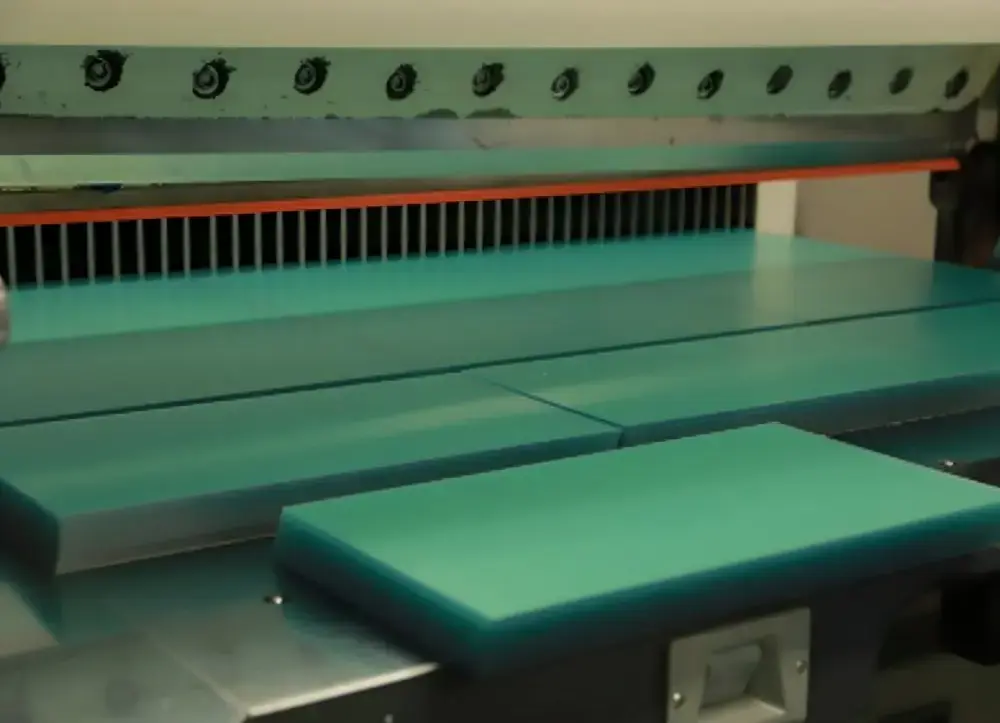
Kaixin provides film lamination services for optical films, protective films, hardened films and other functional materials. Depending on material properties and application requirements, the lamination process can be matched with hot-press lamination, cold-press lamination or electrostatic adsorption bonding.
The service supports single- and multilayer structures, including double-sided lamination, partial bonding and multilayer compositing. For projects with higher cleanliness requirements, Class 10,000 clean-room processing is also available.
Lamination Methods
Lamination Capabilities
| Maximum Lamination Width | 1600 mm |
|---|---|
| Material Thickness Range | 0.05–2.00 mm |
| Process Methods | Hot-press / Cold-press / Electrostatic adsorption |
| Bonding Pressure | Adjustable, up to 7 mpa |
| Double-Sided Lamination | Available |
| Partial Bonding | Available |
| Multilayer Compositing | Available |
| Clean Room Processing | Class 10,000 available |
Typical Lamination Applications
How Kaixin Controls Lamination Quality
Before lamination, Kaixin evaluates key material characteristics such as surface energy, thickness tolerance, thermal shrinkage and flexibility to determine the appropriate processing method and parameters.
During production, lamination speed, pressure and alignment are controlled according to the material structure and application requirements. This helps reduce the risk of residual bubbles, localized stress, delamination, edge lifting and surface defects while improving batch-to-batch consistency.
Material Evaluation
Process Matching
Based on material properties and project requirements, Kaixin selects the appropriate lamination method and processing parameters, including hot lamination, cold lamination or electrostatic adsorption bonding.
The objective is not simply to bond two materials together, but to establish a stable process window suitable for the substrate combination and downstream application.
Speed, Pressure and Alignment Control
Lamination speed, bonding pressure and alignment are adjusted according to material behavior and composite structure. Precise process control helps maintain stable bonding performance and reduce variation between production batches.
Defect Risk Control
These controls are particularly important for display, home appliance panel and automotive interior applications where surface quality and structural consistency are critical.
Materials Supported for Slitting and Lamination
Kaixin supports precision slitting and lamination for a range of plastic films, optical films and sheet materials. Processing parameters are matched to material thickness, rigidity, surface characteristics and downstream application requirements.
The service can be used with Kaixin-manufactured materials as well as qualified customer-supplied and third-party substrates.
PC Films and Sheets
Kaixin processes PC films and sheets for optical, decorative and functional applications requiring dimensional stability, controlled edge quality and compatibility with downstream lamination or molding processes.
PET Films
PET films can be processed in roll or sheet formats for applications involving optical functions, protective layers, decorative structures and other functional film assemblies.
PMMA and Other Optical Materials
Kaixin can also evaluate PMMA films and other customer-supplied optical or functional materials for slitting and lamination. Material compatibility is assessed before formal processing to confirm suitable process conditions.
Flexible Processing Models for Different Project Needs
Kaixin supports different collaboration models depending on material source, project stage and processing requirements. Customers can combine Kaixin materials with in-house secondary processing, provide their own films or sheets for custom processing, or work with Kaixin on prototype and multilayer composite development.
Processing with Kaixin Materials
Customers can select suitable grades from Kaixin’s PC, PET and PMMA functional film and sheet portfolio and combine material supply with subsequent slitting or lamination.
This integrated material-and-processing model can reduce coordination steps, simplify logistics and support faster project execution.
Processing Customer-Supplied Materials
Kaixin also supports custom processing of customer-supplied materials, including specified-brand optical films, domestic and imported functional films, and sheet materials.
Before formal production, a basic processability assessment can be carried out to confirm material compatibility and reduce the risk of ineffective trial processing.
Custom Composite Development
For projects requiring specialized multilayer structures or customized functionality, Kaixin can support:
- Multilayer structure design
- Prototype fabrication
- Process validation
- Material substitution evaluation
- New product development support
This approach is suitable for new project introduction, material replacement, supplier transition and other development-stage requirements.
Applications of Film Slitting and Lamination
Kaixin’s precision slitting and lamination services support a range of downstream manufacturing applications where dimensional accuracy, surface quality, material cleanliness and process consistency are important.
Typical application areas include optoelectronic displays, automotive interior components, home appliance panels, printing and decorative structures, and IML/IMD-related film processing.
Optoelectronic Displays
Precision slitting and clean-room processing help prepare optical and functional films for display-related applications where edge quality, dimensional control and surface cleanliness are critical.
Automotive Interior Components
Kaixin supports film and sheet processing for automotive interior applications, including decorative and functional structures used in panels and other film-integrated components.
Home Appliance Panels
Slitting and lamination can be applied to decorative and functional films used in appliance panels, supporting subsequent printing, molding and assembly processes.
Printing and Decorative Panels
Decorative films and sheet materials can be processed to specified dimensions and laminated with protective or functional layers before downstream printing or fabrication.
IML and IMD Processing
Kaixin supports film preparation and lamination for IML and IMD-related applications, including pre-process lamination and multilayer structures requiring controlled material handling.
Quality Control, Cleanliness and Batch Traceability
Kaixin integrates slitting and lamination into its internal quality management workflow to help maintain consistent processing results across production batches.
For display-grade, decorative and other surface-sensitive materials, Class 10,000 clean-room processing is available to reduce contamination risks. Key batch information can also be linked to material sources and processing parameters to support traceability during downstream assembly and quality analysis.
Clean Room Processing
For materials with higher surface cleanliness requirements, slitting and lamination can be carried out in a Class 10,000 clean-room environment.
This is particularly suitable for display-grade, decorative and other applications where dust contamination may affect surface quality or subsequent processing.
Batch Consistency
Kaixin adjusts processing parameters according to material type, thickness and width. Blade selection, tension control, lamination pressure and processing speed are matched to the specific material structure to help maintain stable dimensional and bonding performance across production batches.
Batch Traceability
Processed materials are managed within Kaixin’s internal quality system. Key batch information can be associated with material sources and relevant processing parameters, allowing customers to trace production history during subsequent assembly, quality review or issue analysis.
Why Choose Kaixin for Film Slitting and Lamination?
Kaixin combines functional film manufacturing, material knowledge and secondary processing capabilities to support customers from material selection through slitting, lamination and project validation.
Our service model is designed for industrial customers that require flexible material sourcing, controlled processing quality and reliable technical support for both new projects and ongoing production.
Precision Processing
Standard slitting tolerance can be controlled within ±0.2 mm, with processing parameters adjusted according to material type, thickness and finished dimensions.
Wide Material Compatibility
Kaixin supports PC, PET, PMMA, optical films, functional films and other qualified customer-supplied materials for slitting and lamination.
Clean Room Capability
Class 10,000 clean-room processing is available for display-grade, decorative and other surface-sensitive materials requiring higher cleanliness control.
Customer-Supplied Material Processing
Customers are not required to use Kaixin materials. Specified-brand, domestic and imported optical or functional films can be evaluated for custom processing.
Engineering and Trial Support
Kaixin can support processability assessment, prototype fabrication, small-batch trials and process validation during new project introduction, supplier transition or material substitution.
Integrated Material and Processing Supply
Customers using Kaixin materials can combine material supply with subsequent slitting and lamination, reducing coordination steps and simplifying the material-processing workflow.
Precision Film Slitting and Lamination FAQs
What cutting tolerance can Kaixin maintain for precision film slitting?
Kaixin’s standard slitting tolerance can be controlled within ±0.2 mm and is designed to remain consistent across batch production.
Blade type and tension parameters are adjusted according to material type, thickness and finished width to help reduce dimensional variation.
How do you prevent burrs, dust and edge whitening after slitting?
Kaixin controls these risks through appropriate blade matching, tension control and cleanliness management.
Blade selection helps reduce pulling and burr formation, while controlled tension helps limit stress-related edge whitening. For higher-cleanliness requirements, processing can be carried out in a controlled clean environment.
How do you reduce bubbles and delamination during film lamination?
Before lamination, Kaixin evaluates material surface energy, thickness tolerance and thermal shrinkage characteristics, then selects the appropriate hot or cold lamination process.
Lamination speed, pressure and alignment are controlled to help reduce residual bubbles, localized stress, delamination and edge lifting.
Can Kaixin process customer-supplied films and sheets?
Yes. Kaixin supports customer-supplied optical films, functional films and sheet materials, including domestic and imported brands.
A basic processability assessment can be carried out before formal processing to confirm material compatibility and avoid ineffective trial processing.
Do you support small-batch slitting and lamination trials?
Yes, subject to production scheduling. Kaixin can support small-batch slitting or lamination trials, sample validation and feasibility processing during the RFQ or technical clarification stage.
This is suitable for new project introduction, supplier transition and material substitution validation.
What is the minimum film slitting width available?
Under standard conditions, the minimum slitting width can reach 10 mm.
The actual achievable width depends on material thickness, rigidity and processing characteristics. Custom widths and lengths can also be evaluated according to customer drawings or specifications.
Are processed slitting and lamination batches traceable?
Yes. Key batch information can be linked with material sources and relevant processing parameters within Kaixin’s internal quality management system.
This supports downstream assembly, quality analysis and issue traceability when production history needs to be reviewed.
Request a Film Processing Evaluation
Need support with precision film slitting, lamination, customer-supplied material processing or a new composite film project?
Send us your material type, thickness, original dimensions, required finished dimensions, quantity and processing requirements. Kaixin can review material compatibility and processing feasibility before quotation, including slitting width, lamination method, cleanliness requirements and trial-production needs.